Heavy clouds hang over the Lyngen Alps on Saturday morning as I set off with a fellow student from the parking lot in Sør-Lanangsbotn towards the lake “Blåisvatnet”. The glacier lake has been on my wish list for a long time, because in photographs its turquoise color looks so intense that it almost seems unreal. And today, I finally want to find out whether the lake really looks like that, or whether the pictures have been edited.
We can already see the Lenangsbreen glacier from the parking lot, whose meltwater feeds Blåisvatnet. The trail is easy at first and climbs only moderately. With temperatures of twelve to fourteen degrees Celsius, the weather is also pleasantly mild for hiking. Nevertheless, there is a slight humidity in the air that makes us sweat quickly. Finding our way is easy, as the trail winds through the wide valley like a broad, rocky highway.
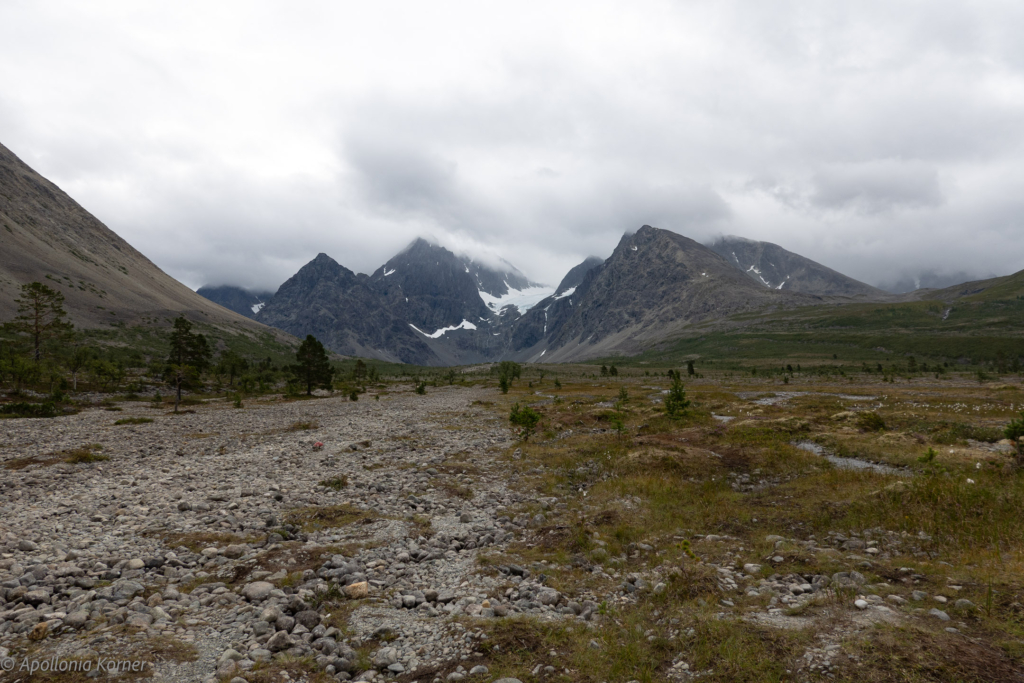
At first, the stones are small, and the ground is easy to walk on. But the further we hike into the valley, the rougher the terrain becomes. The small stones gradually give way to larger rocks, and on the final stretch we have to make our way through a field of boulders. The slightly more than four kilometers to the lake are not a great distance, but constantly walking over the rocky terrain becomes tiring after a while.
Suddenly, the temperature drops, and a sharp wind picks up as we approach the lake. It carries the distinct smell of ice and cold air and makes us realize that we are now entering the glacier region. One last time, we have to climb over a few large rocks, and then the lake finally comes into view.
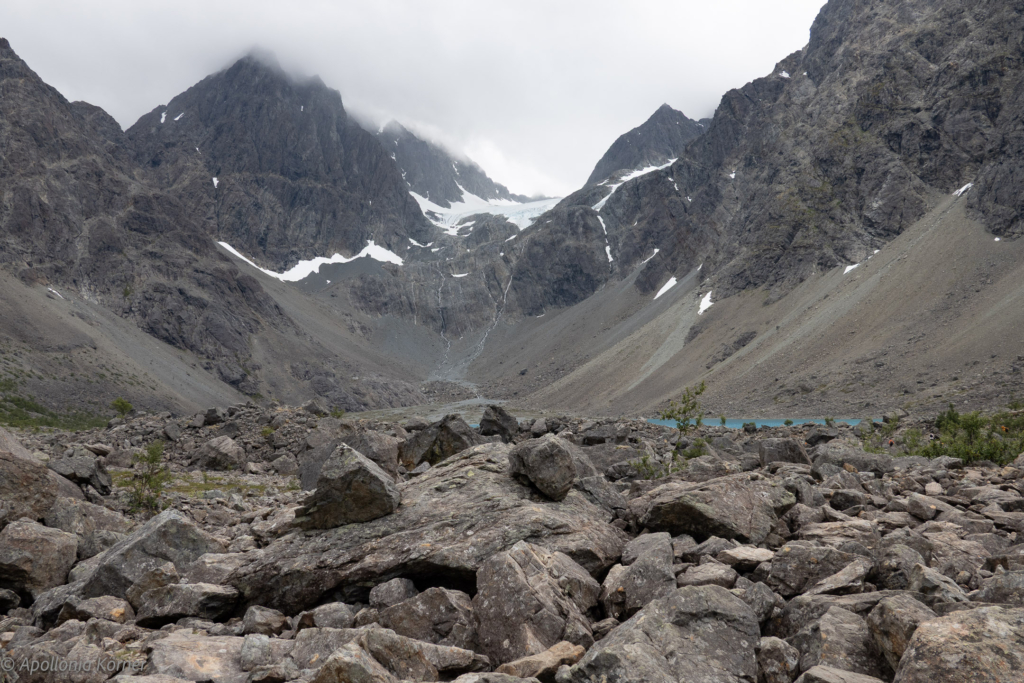
The icy turquoise lake lies at the foot of the mountains Jægervasstinden and Lenangstinden. The color is indeed as intense as it looks in the photographs. Almost as if a painter had poured turquoise watercolor into the lake. But this extraordinary color needs no artist, because the Lenangsbreen glacier takes care of that.
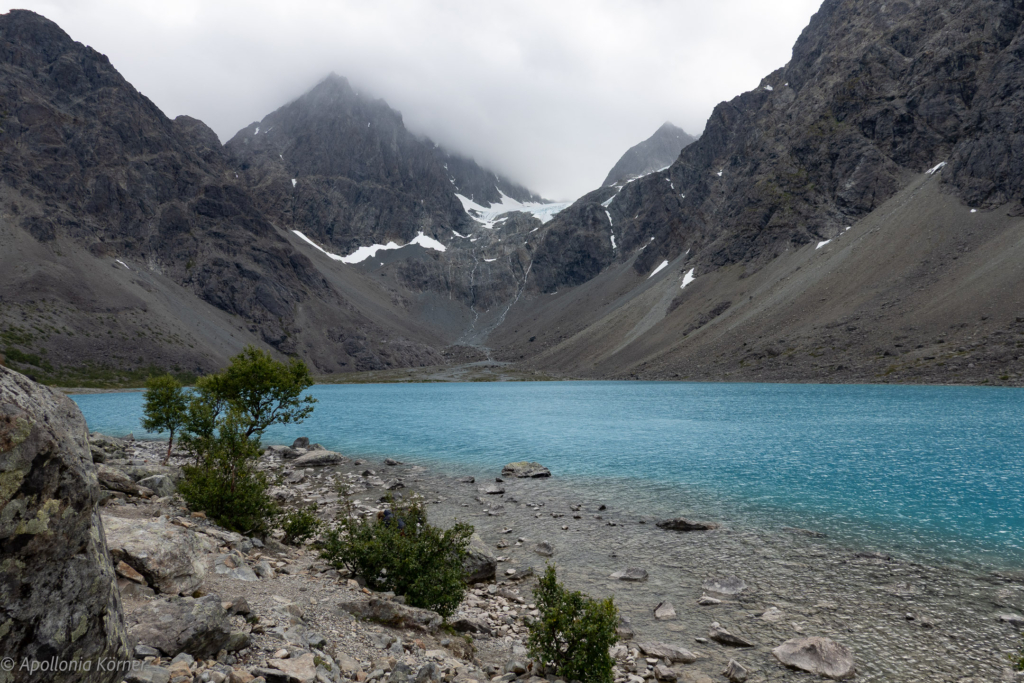
The glacier’s meltwater contains extremely fine particles of rock, known as silt. As the glacier slowly moves, the ice grinds away at the rock beneath it and carries the resulting rock flour along with it. The tiny particles remain suspended in the lake and scatter the incoming light. This is what creates the intense turquoise color that makes the lake look so unreal.
If the temperatures up here were not considerably colder than down in the valley, we could probably sit by the shore for a long time and simply take in the view. But instead, after a short break, we set off on our way back. And now the more pleasant side of the hike begins: the further we get away from the lake, the smaller the stones become and the flatter the trail gets. Our steps become lighter, and although the return journey is much easier, we are still relieved when, on the final stretch, we once again have firm, smooth ground beneath our feet.
We are tired when we arrive back at the car, and glad that we set off so early this morning, because right now it starts to rain. It was an instructive hike, because now we know that the turquoise color in the photographs was no exaggeration.