On the third day of our voyage, I was standing at the helm late at night during my watch. A light wind was blowing, the air was cold, but the sea was calm. Toward the end of my shift, I received the order to change course. I followed the command, and at once the compass needle began to spin merrily. Only after a full 180-degree turn came the next instruction: “Hold this course.” At first, I didn’t think much of it. My watch was over, I was tired, and I went to bed.
When I woke up the next morning, we were still sailing south, and a dreadful feeling began to settle in my stomach. My fellow travelers had also noticed the change of course, and the rumor mill was in full swing—no one knew why we had turned around.
It wasn’t until noon that we were called to an official meeting. What we had all feared was now confirmed: “We will not be sailing through the Northwest Passage” There were too many icebergs this year along our planned route, posing too great a risk to the ship and the success of the voyage. Our disappointment was immense. Of course, we knew the passage might be difficult, but none of us had expected to give up after only three days.
After nearly a week, we found ourselves once again at the latitude of Nuuk. There we put the ice pilot ashore—he would not be needed for the rest of the journey. Where our voyage would take us instead, we still did not know.
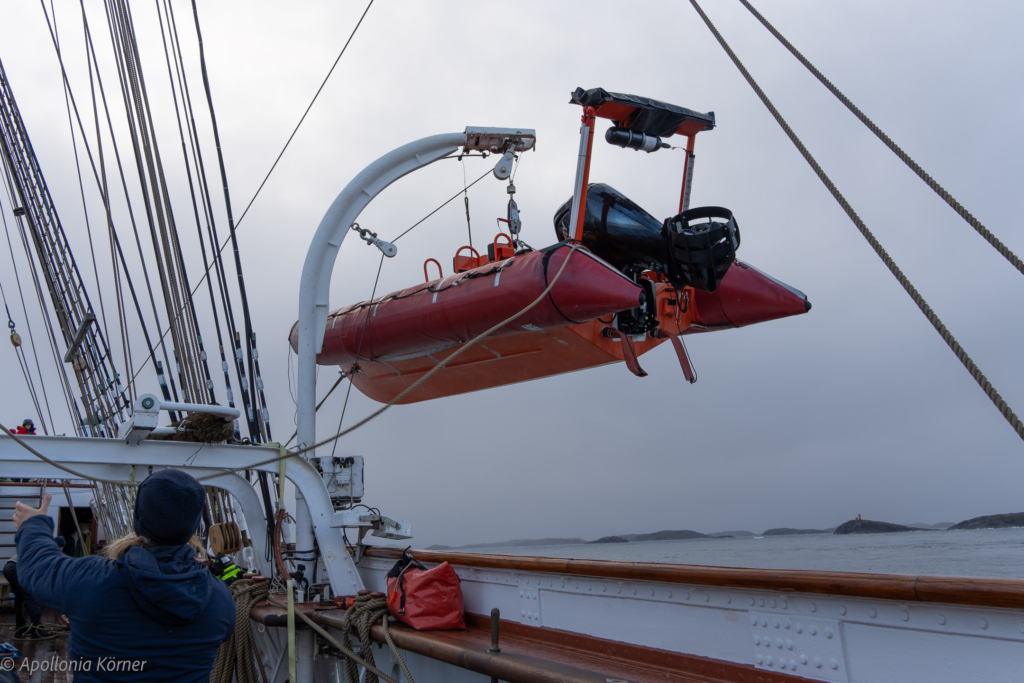
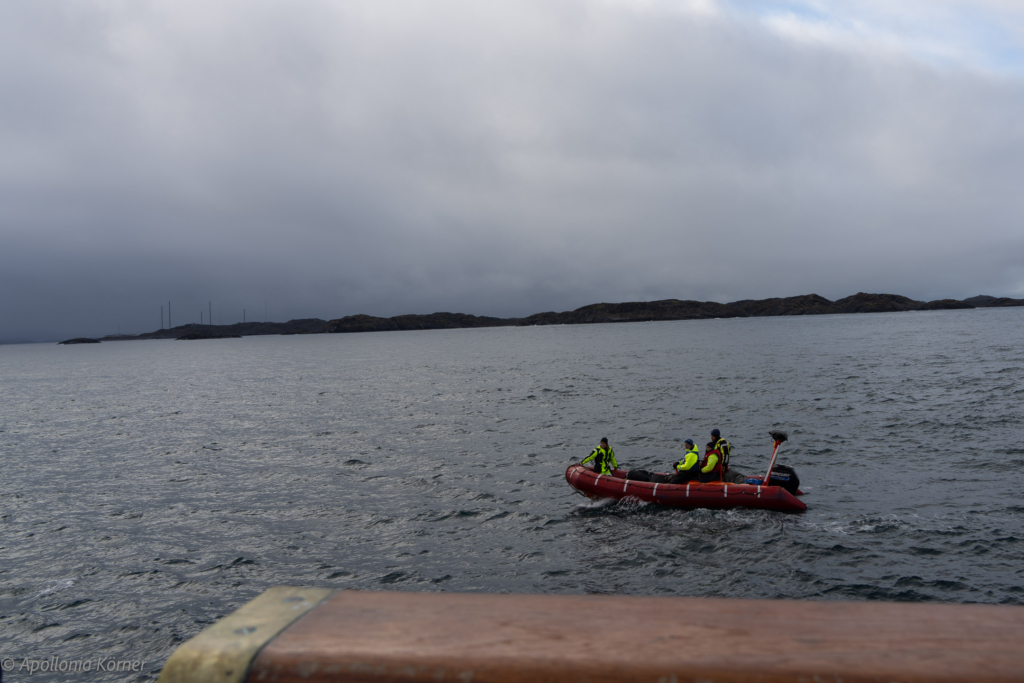
Gradually, we recovered from our disappointment and tried to make the best of the situation. Fortunately, our days were filled with activities: watch duties, lessons, coursework, meals, and sleep. There was little time left for brooding.
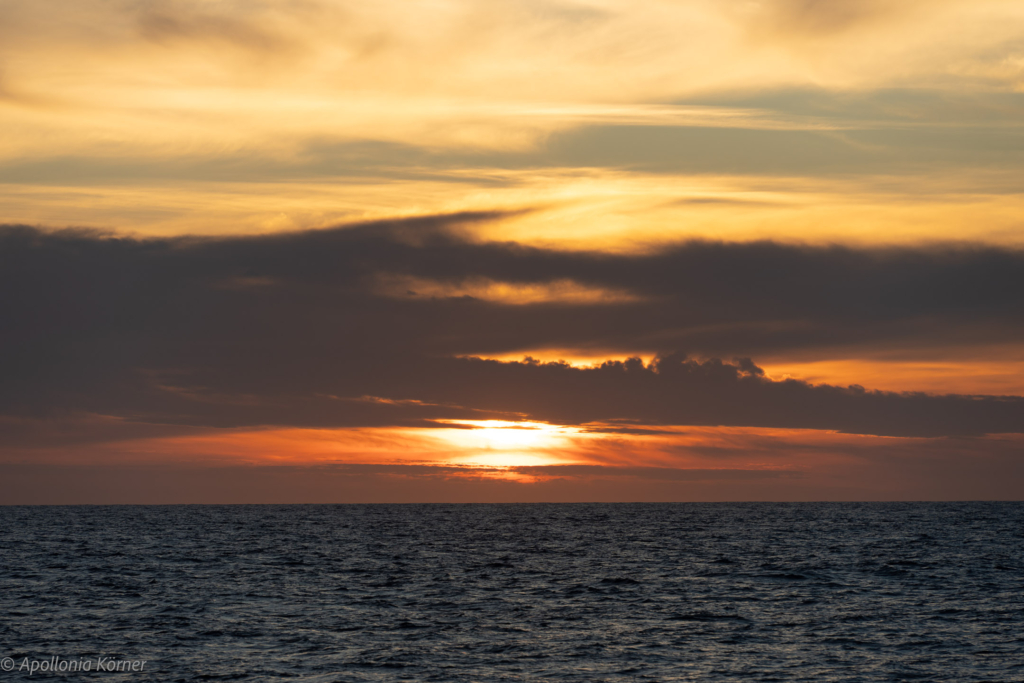
A few days later, our new destination was announced. We still had about a week and a half to go before reaching the final port. There wasn’t much variety to report from that time, for life aboard a sailing vessel follows a steady rhythm. Yet it is precisely in this monotony that one begins to notice the small differences. During the long watches, I started to perceive the subtle variations in the color and movement of the waves.
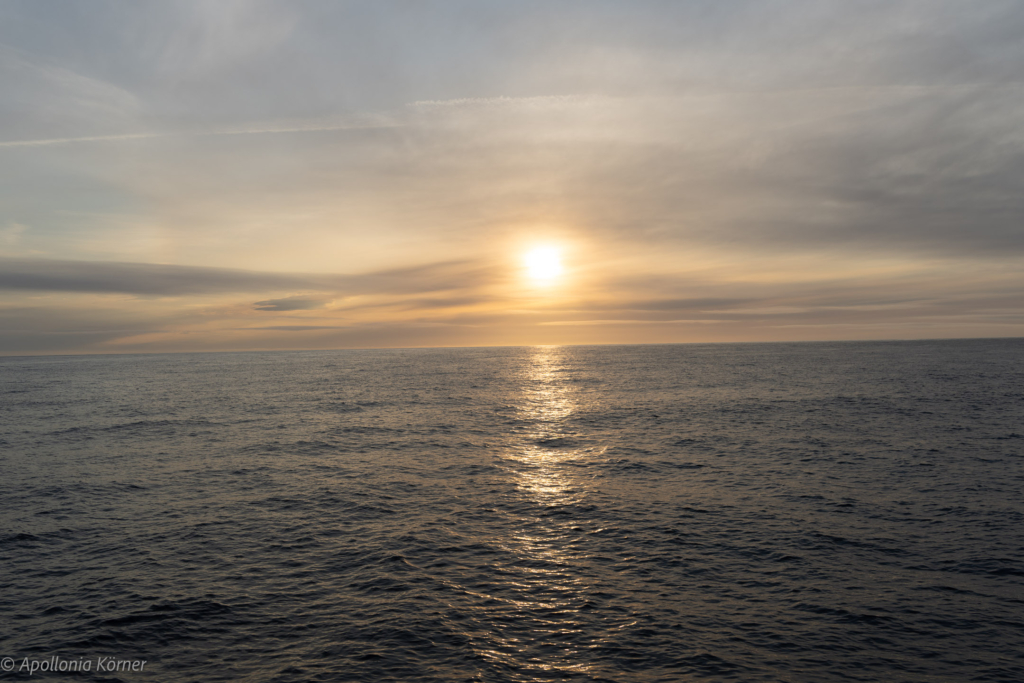
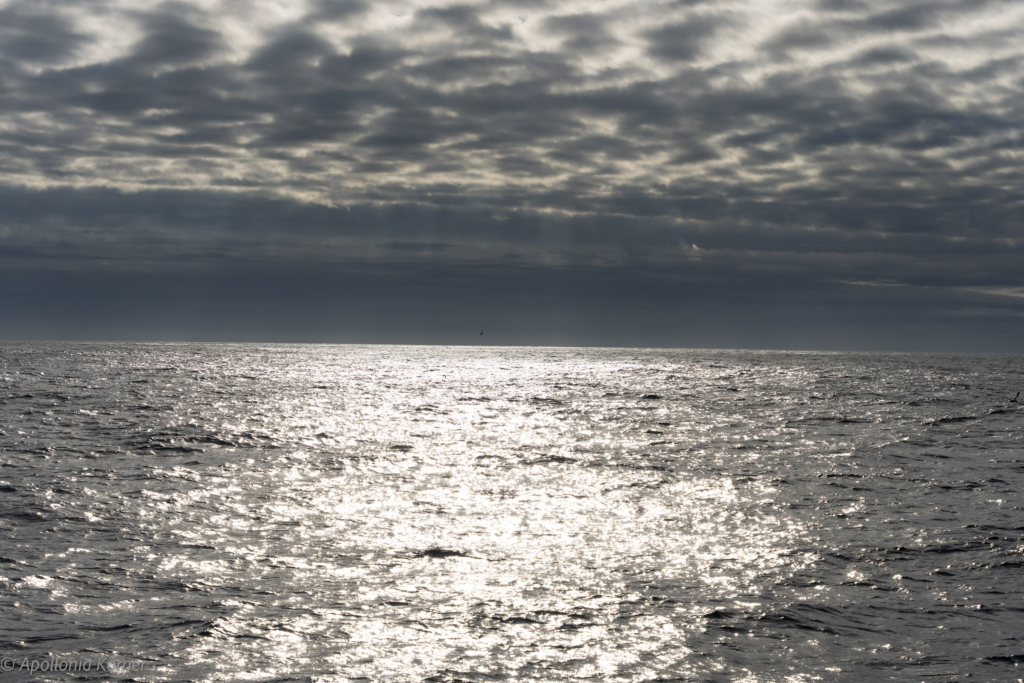
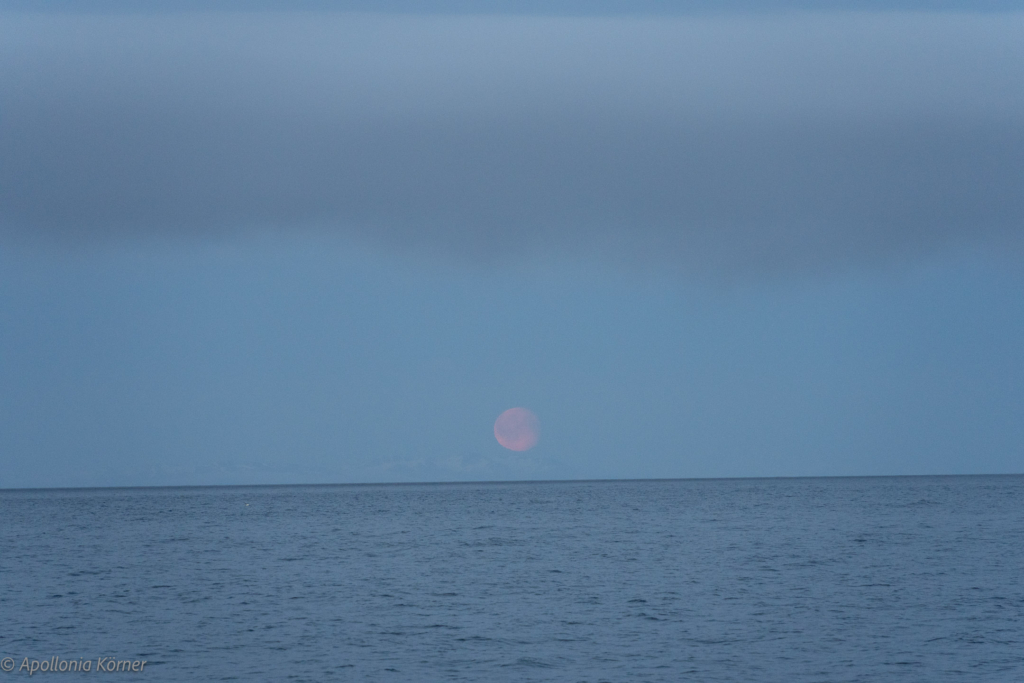
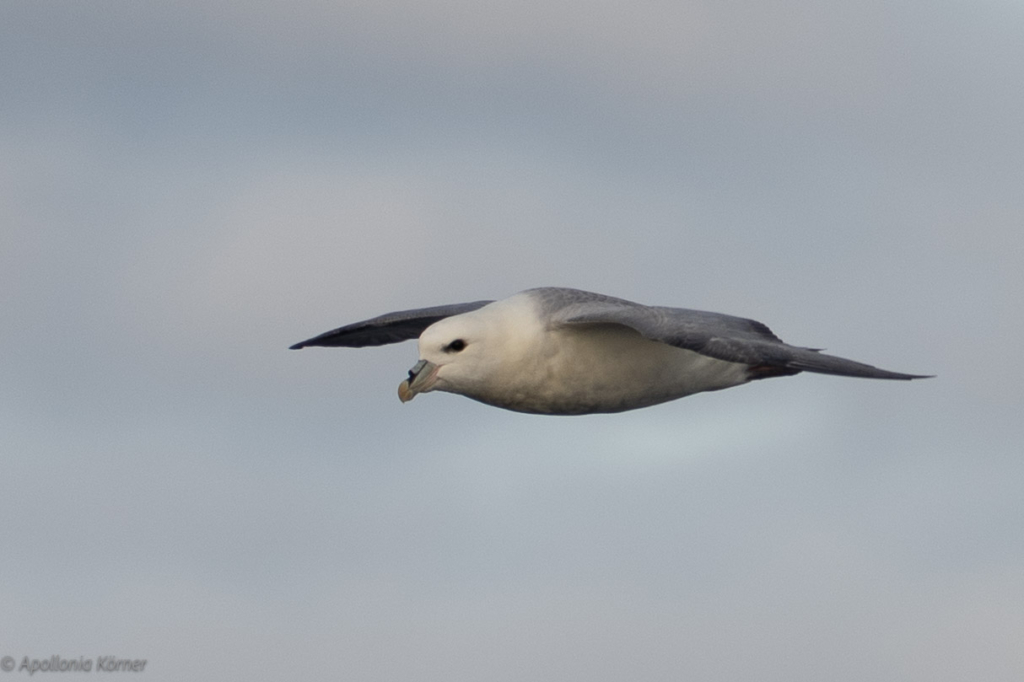
From time to time, a few pilot whales appeared. Otherwise, only the northern fulmars (Fulmarus glacialis) remained our constant companions.